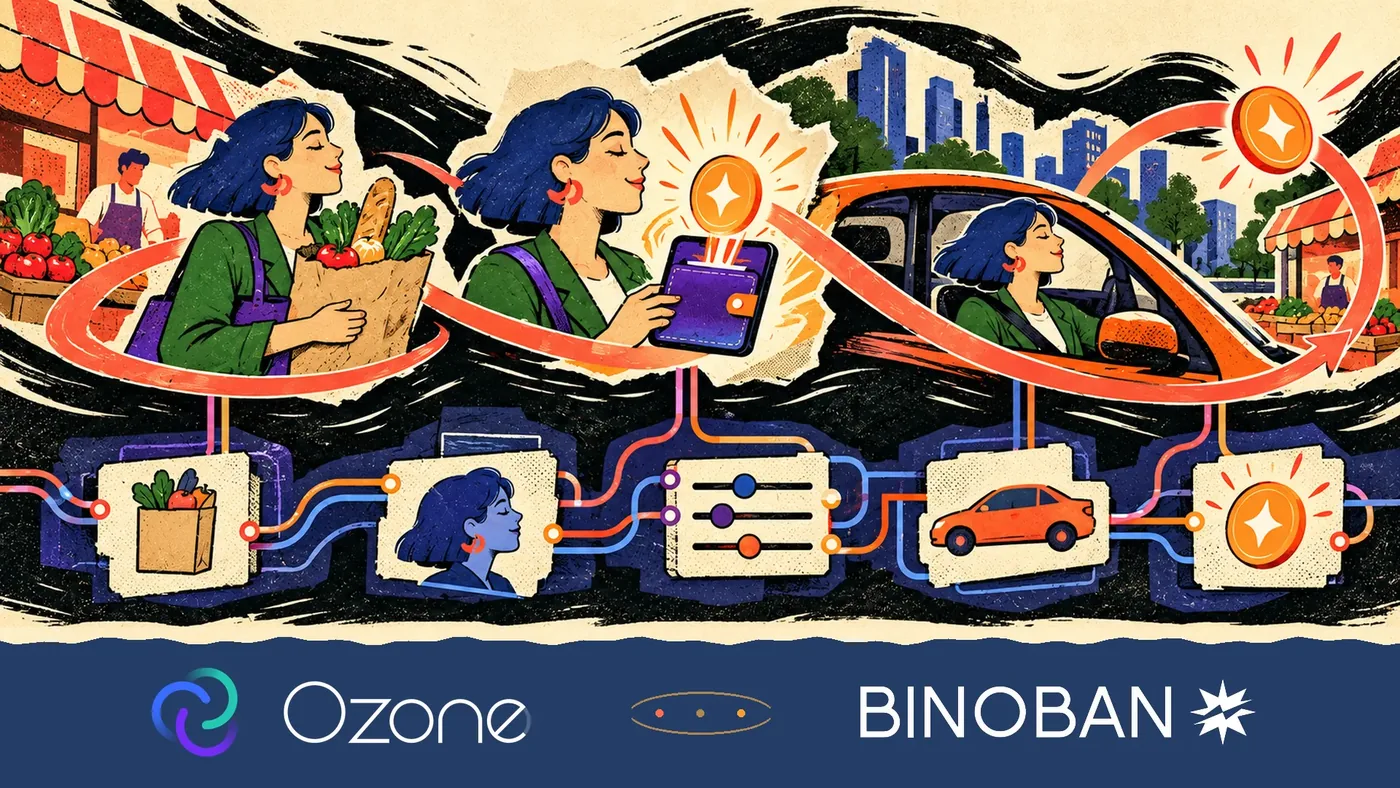
An Okala purchase can lead to a customer’s next Tapsi ride. After paying through Ozone’s gateway, the customer receives a Tapsi ride reward in their Ozone Orange wallet. Once they take the ride and pay with that wallet, an Okala shopping reward awaits in their Ozone Red wallet. Ozone presents this loop to customers as a simple, clear offer.
The experience connects an online purchase with a trip across the city: a tangible online-to-offline (O2O) journey. Making it work requires the services involved to share an understanding of the customer’s actions. A qualifying purchase must be recognized, reward eligibility checked, and the customer’s next action able to move the journey forward.
Ozone leads the experience and operates the ecosystem
Ozone designs and runs this collaboration. It decides which services to connect, what benefit each action earns, the rules for using those benefits, and what the customer sees at each step. Coordinating partners, wallets, touchpoints, and operating teams is part of running the ecosystem.
Across Golrang Industrial Group, these collaborations can extend beyond a single brand. A customer may buy from one service, use a benefit in another, and then return to shop again. Ozone turns that opportunity into a clear offer for customers and a manageable process for the businesses involved. The Okala–Tapsi experience is one example of an approach Ozone is extending to further collaborations across the group.
How a purchase becomes the next decision
The journey begins with what the customer actually does. When a successful Okala purchase is recorded, details such as the merchant and transaction status determine whether the event qualifies for the campaign. Ozone’s conditions are then evaluated, including conditions related to the customer’s wallet. The result determines which action to take, which message to send, and which future behavior the journey should wait for.
In the other direction, a successful Tapsi transaction can start the path back to Okala. These journeys do not unfold the same way for everyone: each step depends on recorded events and the individual customer’s profile. Ozone’s offer can therefore respond to behavior across both services.
The journey at a glance: qualifying purchase → identify the customer and check conditions → trigger an action or message → observe behavior in the second service → decide the next step.
What Binoban makes possible
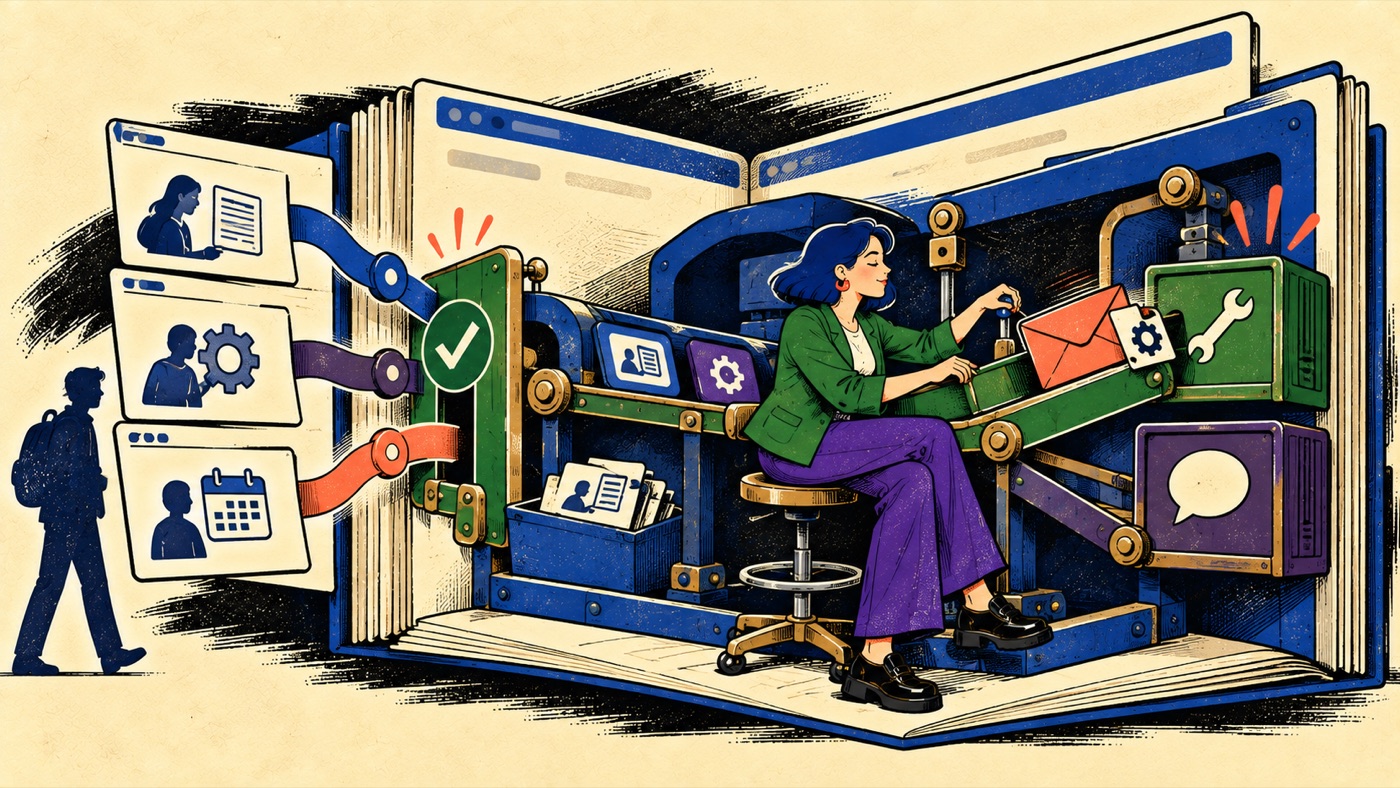
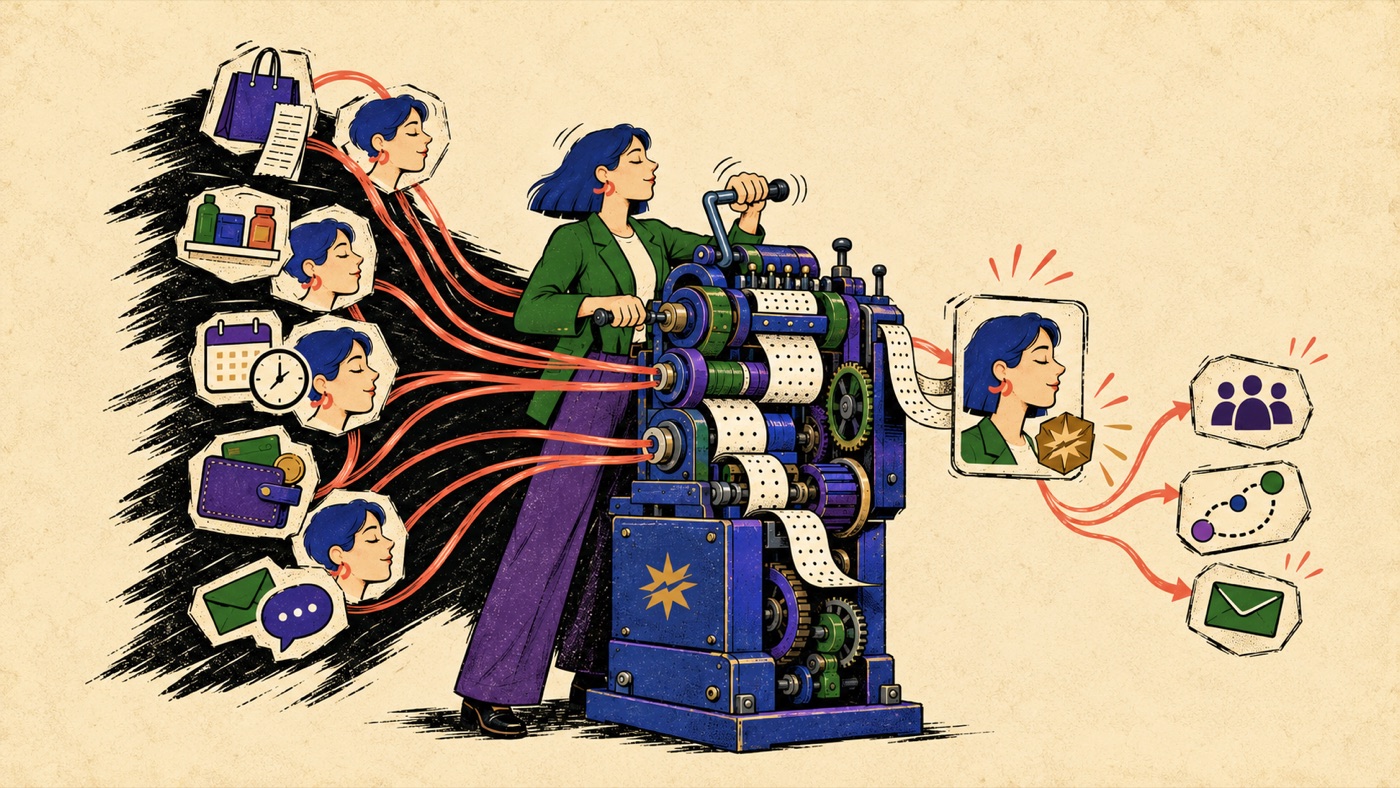
Binoban brings data, decisions, and execution into one operational flow. Purchase events and signals from other touchpoints feed into the customer profile. Profile traits help determine eligibility. A customer journey can then apply Ozone’s rules to send a message, call an API, or wait for the next event.
That connection shows the depth of Binoban’s role: transaction events, profile traits, business rules, actions, and outcome measurement become parts of the same decision. Ozone defines which customer experience and cross-service collaboration create value; Binoban makes those decisions executable using customer data.
Together, the Okala–Tapsi journeys have recorded hundreds of thousands of entries to date. Across Ozone’s ecosystem, several million customer profiles are active in a typical month. At that scale, shared infrastructure and clear rules matter. Ozone’s team needs to manage eligibility, messages, and actions, and see what customers do after each step.
The most useful measures of business value concern what happens next: How many customers use a benefit in the second service? How many return to shop, and how many repeat the loop? Which offer works best for each group? Those answers help Ozone improve the experience based on actual behavior.
From clear rules to prediction and decisioning
Events and customer traits drive the rules in this campaign. The same architecture can also support prediction: estimating who is likely to use a benefit, return to shop, or respond to a message can help inform the next step.
Prediction creates value when it informs decisioning. Ozone sets the business goal, offer rules, and boundaries. Binoban can combine those rules with customer context and predictions to trigger an appropriate action, then make the outcome available for the next decision. This creates a path from understanding the customer to choosing a better offer, time, and channel.
Infrastructure under Ozone’s control
Binoban is deployed on-premises in Ozone’s own infrastructure, with a white-label interface carrying Ozone’s brand. Ozone retains control over customer data and the environment where it is processed—an important foundation for managing access and expanding collaboration across services at enterprise scale.
As each new service joins, Ozone can bring its touchpoints, approach to customer identification, meaningful events, and offer rules into the same framework. This helps Ozone design and operate new experiences across Golrang Industrial Group while Binoban supports their data-driven execution.
From one campaign to a way of working together
Customers see a simple loop: shop, ride, and receive the next benefit. Behind it, Ozone designs and operates collaboration across services. Binoban connects customer behavior to decisions and actions so each step can respond to what has actually happened.
For a business with multiple products, the value lies in that continuity: the customer journey carries on as people move between services. Ozone designs and leads the path; Binoban provides the infrastructure to run, examine, and extend it.
Where could this start in your ecosystem? If your customers move between products or services, explore a real cross-service journey with the Binoban team. Together, we can define its trigger event, the data and connections it needs, the next action, and how to measure success.
Take the next step