Insights
Perspectives on customer data as infrastructure.
Category thinking, architecture, and field notes on identity, deployment, activation, and first-party data monetization, written by the people who own these decisions.
The Blog
Latest thinking.

If an Agent Clicks an Ad, Who Pays for It?
For years, the advertising industry treated all non-human traffic as one thing: bots, crawlers, fraud. An agent fits none of those categories, and its click needs a different unit of measurement.
Read the article →
From Events to Customer State: Why Computed Traits Matter in a CDXP
Customer data tells us what happened. Computed Traits help us understand what that history means now, and make it usable for segmentation, journeys, personalization, and decisioning.


Let's Start Moving CDXP Beyond Marketing
The same architecture that scores a message can also decide credit limits, financing terms, and advertiser recommendations.
Read the article →
An Agent Is Not the Customer's Twin
Identity, profiles, and data contamination in Agentic Commerce.
Read the article →
The Store Gets the Order. But Who Shapes the Purchase Decision?
Power, AIDA, and the economics of Retail Media in the age of agents.
Read the article →
When data becomes a defense mechanism
The hidden risk for leaders is not irrationality. It is safe, data-backed sameness. Data should be an instrument of foresight, not a shield against blame.
Read the article →
Retail media is not an ad product. It is a data infrastructure problem
The durable retail media business is built on trusted data, catalog quality, measurement, and settlement, not on ad placements alone.
Read the article →
Why on-prem customer data platforms are coming back
A market correction driven by data residency, integration gravity, AI governance, and the operational reality of large enterprises.
Read the article →
AI in customer data will fail unless it can activate and measure decisions
Prediction is rarely the problem. AI creates value only when scores become activated, governed, measured decisions.

How Binoban tracks and activates visitor intent on its own website
A website should not only publish content. It should understand intent and route demand, inside its own consent boundary.

The economics of first-party data monetization
Monetization should be evaluated as a controlled business line, not a campaign add-on, with its own revenue logic and payback.
Read the article →
Build vs buy: why enterprise CDXP is harder than it looks
The instinct to build internally underestimates the real work: identity, consent, integrations, governance, and maintenance.
Read the article →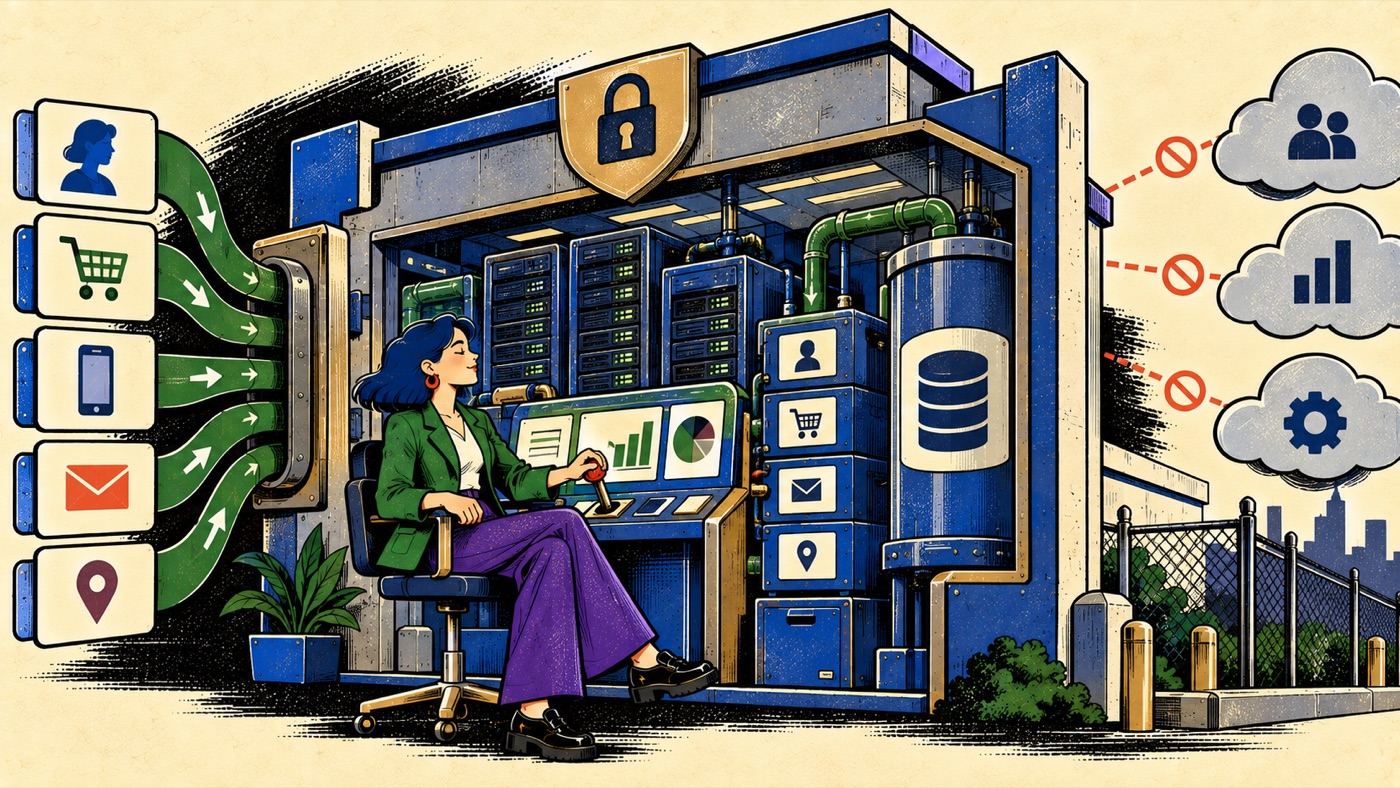
On-premise MarTech is control, not compromise
For large enterprises, deployment model is a strategic decision about data ownership, security, and governance, not a step backward.
Read the article →
CDP vs CDXP vs CRM: what enterprises actually need
CRM, CDP, BI and marketing automation each solve part of the problem. Enterprises need the layer that makes them agree.
Read the article →
CDXP is a category, not a feature
The category that turns a website from a brochure into an operating surface.
Read the article →
Identity resolution is a control problem, not an accuracy contest
Vendors compete on match rate numbers. Enterprises should ask who controls the rules, and where the data lives.

Retail media begins with first-party intelligence, not ad inventory
Durable media revenue is built on identity and audience quality you actually own, not on the scramble for sponsored placements.
Read the article →Notes from the infrastructure layer.
Occasional, substantive writing on customer data, identity, and monetization. No newsletters about newsletters.
Work with the team