Start with a decision someone needs to make
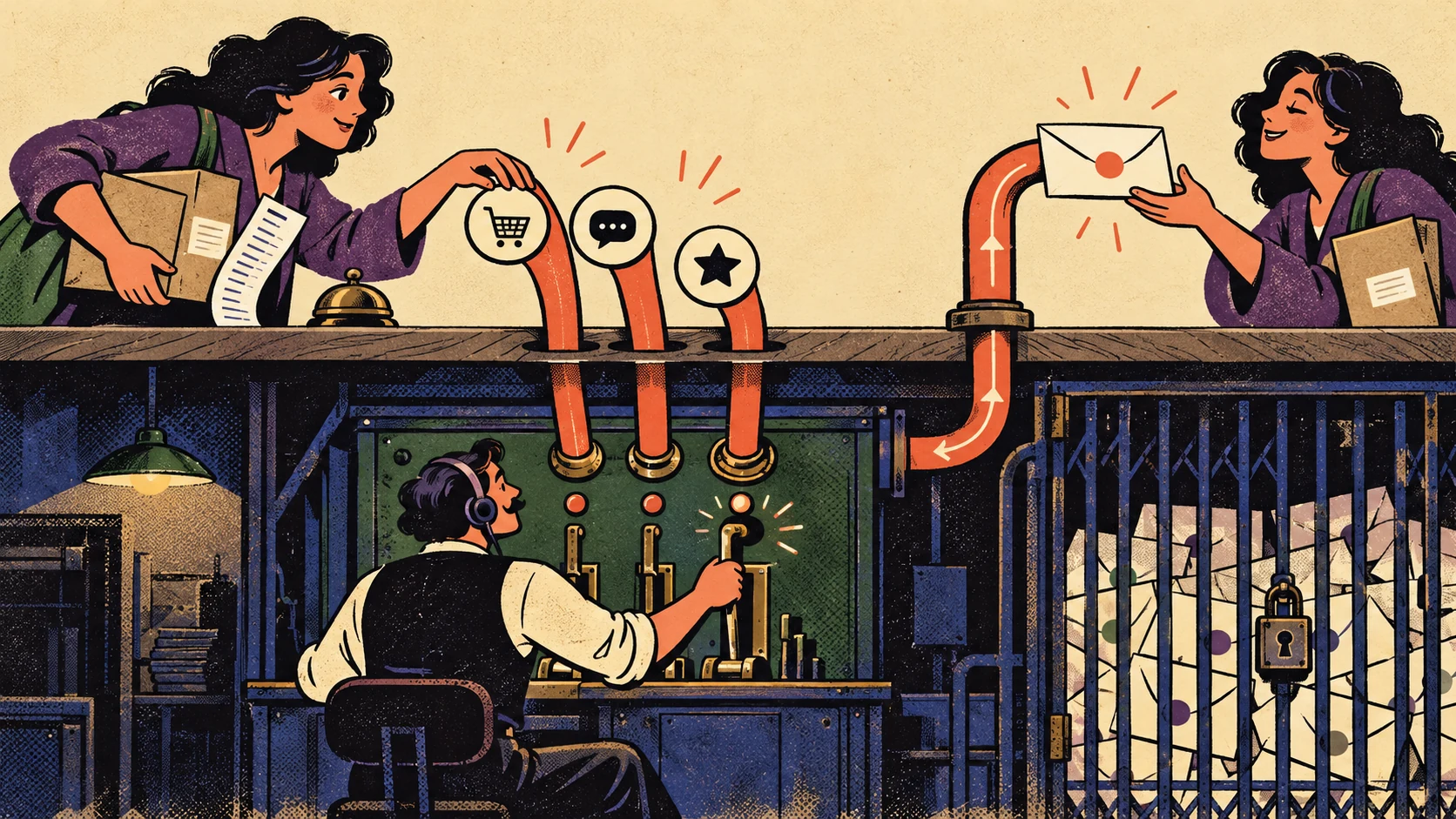
A customer buys a lamp on a retailer’s website. The order system records payment, the delivery system holds the shipment status, and a service agent receives a question about installation. Meanwhile, an acquisition campaign still treats the customer as someone who has never bought. Every system has part of the story. The next message needs the parts to agree.
The useful starting question is specific: should this person receive a first-purchase offer, a delivery update, installation guidance or no promotional contact today? A Customer Data Experience Platform, or CDXP, connects customer information with the decisions and actions that depend on it. In Binoban’s terminology, that includes the path from ingestion and identity to profiles, audiences, engagement and measurement.
Agree on what the events actually mean
An order-created event is different from a completed payment, a delivered parcel or a retained purchase after the return period. Define the evidence needed for each decision before connecting more sources. For the acquisition campaign, a valid completed purchase may be enough to stop the offer. Installation guidance should usually wait for delivery.
A small event contract should identify the source, stable customer and order identifiers, event time, processing time, status and correction rules. Duplicate delivery of the same event must not become two purchases. A late cancellation should update the interpretation of the order. These are operating definitions that marketing, engineering and analytics need to share.
Resolve identity with explicit boundaries
The same person may browse anonymously, sign in on another device and buy through a different channel. Identity resolution connects evidence under defined matching rules. A verified account identifier can support a stronger connection than a shared device or a similar name. Ambiguous evidence should remain visible as ambiguity.
Connecting records does not grant unrestricted permission to use them. Contact preferences, purpose restrictions and channel reachability belong alongside identity. A known customer with a valid phone number can still be ineligible for promotional SMS. Plan how corrections to identity and permissions will reach downstream audiences.
Turn history into current customer state
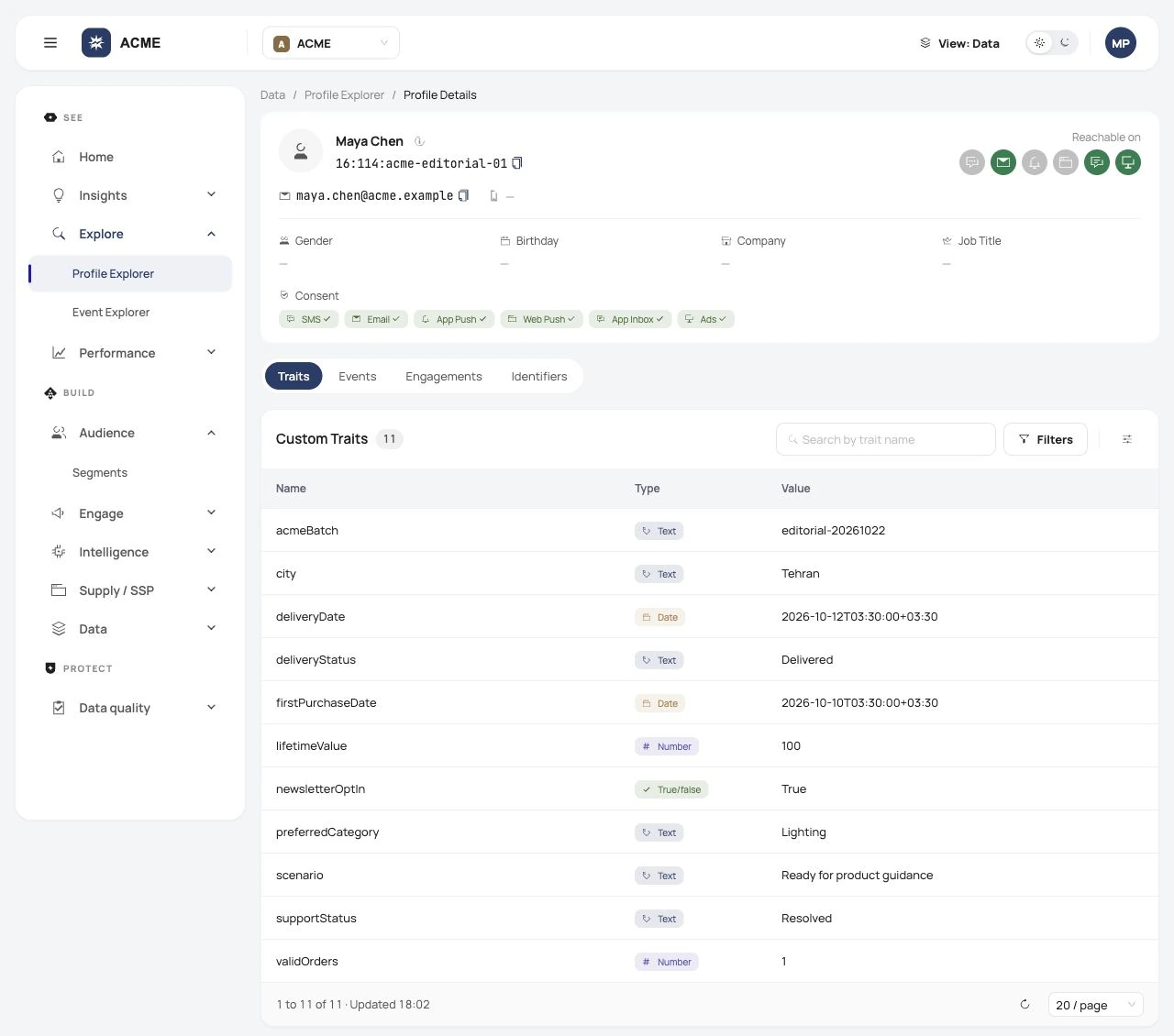
A timeline tells the team what happened. A usable profile also answers what is true now: one valid purchase, delivery pending, an open installation request and promotional email permitted. Derived attributes such as days since purchase need an explicit formula, observation window and refresh method.
Freshness depends on the decision. A daily value summary may be adequate for planning a monthly campaign. Stopping a cart reminder after checkout needs a shorter, measured delay. Track the path from event arrival to profile update, audience evaluation and destination update. A fast first step cannot compensate for a stale last step.
Translate state into an audience and a next step
For the lamp buyer, a practical rule is to exit first-purchase acquisition after the qualifying order. A separate post-purchase audience can include delivered orders, no unresolved service request and an allowed contact channel. Each rule should have examples of people who belong and people who must be excluded.
The next step can be installation guidance, a relevant accessory later, or a pause while service resolves the issue. Treat no contact as a valid result. In Binoban, the relevant product areas are Customer 360 and Segmentation, Computed Traits and Engage. The exact rule and available destination depend on the workspace’s configured data and integrations.
Keep the decision valid until execution
A customer can change while a message waits in a queue. Recheck the conditions that can invalidate the action: another purchase, a changed permission, an open support case or a recent contact from another journey. Decide which system owns the final send check and how a cancellation reaches an external sender.
Make failures observable. A failed profile update, destination rejection or missing delivery acknowledgement needs an owner and a recovery path. Preserve enough decision context to explain why an action was chosen, without putting unnecessary personal data into logs.
Measure the customer outcome
Delivery and click rates describe parts of execution. The business question may concern a valid second purchase, successful product adoption or fewer irrelevant contacts. Write the outcome definition and observation window before launch. Use a randomized comparison when the question is whether the intervention caused additional value.
Start with one journey and one accountable owner. Document the events, matching rules, current-state fields, audience, contact checks and outcome. Run a fictional customer through the complete path, including cancellation and permission changes. That exercise makes the connection between customer data and customer action concrete enough to review.
Take the next step