
Follow the message that should have stopped
A shopper leaves a cart on their phone, completes checkout on a laptop and receives a cart reminder by SMS ten minutes later. The message can be well written and correctly delivered while still being wrong for that moment. To fix the experience, trace what changed between the cart event and the final send.
Several failures can produce the same symptom. The purchase may not have arrived, the two devices may not resolve to the same customer, an audience may refresh too slowly, or an external sender may already hold the reminder. Channel coordination requires a shared customer definition and a reliable execution contract.
Create one decision timeline
Record the cart event, purchase event, identity update, audience change, message reservation and delivery acknowledgement. Distinguish event time from processing time. If checkout happened before a reminder was evaluated but the event arrived later, the recovery decision differs from a purchase made after the reminder was sent.
Use stable event and action identifiers to recognize duplicates. A retry should not create a second message merely because the first delivery acknowledgement was delayed. Agree on which component can cancel a reserved action and what the system reports when an external send can no longer be withdrawn.
Separate campaign interest from customer eligibility
The renewal team, cross-sell team and promotion team may all have a legitimate reason to contact one customer. Their reasons do not establish that three messages should be sent. First evaluate customer eligibility: current need, permission, recent contacts, service status and any product-specific restrictions.
Then apply a documented priority policy. An important service update may take precedence over a promotional offer. A recently resolved issue may call for a quiet period. Build the choice around the customer’s situation, and define what happens when no candidate action qualifies.
Re-evaluate after waits and before the send
A journey can enter on a valid signal and become inappropriate during a waiting step. Recheck purchase completion, permission and relevant service conditions after the wait. The last responsible check should happen as close as practical to the send, with a clearly measured limit on data freshness.
An audience exit does not always erase a message already exported to another system. Use the destination’s supported suppression or cancellation mechanism, or shorten the interval between final eligibility and dispatch. Document residual risk instead of describing the whole chain as instantaneous.
Choose channel and timing together
A customer’s permitted and reachable channels form the available set. Preferences, local time, recent delivery results and the purpose of the message narrow the choice. A failed email is not permission to send SMS. A fallback needs its own eligibility checks and a reason to contact again.
Frequency controls should reflect the combined experience when the architecture supports it. Two separate campaign caps can still allow too much contact overall. Decide which service messages are exempt, whether several channels share a cap, and how simultaneous journeys reserve capacity without racing each other.
Design a recovery path
If an unexpected contact pattern appears, pause the relevant automation, inspect the affected cohort and review queued actions. Correct the data or rule, test the correction with fictional profiles and restart in a controlled way. Avoid replaying every missed action automatically: the original opportunity may have passed.
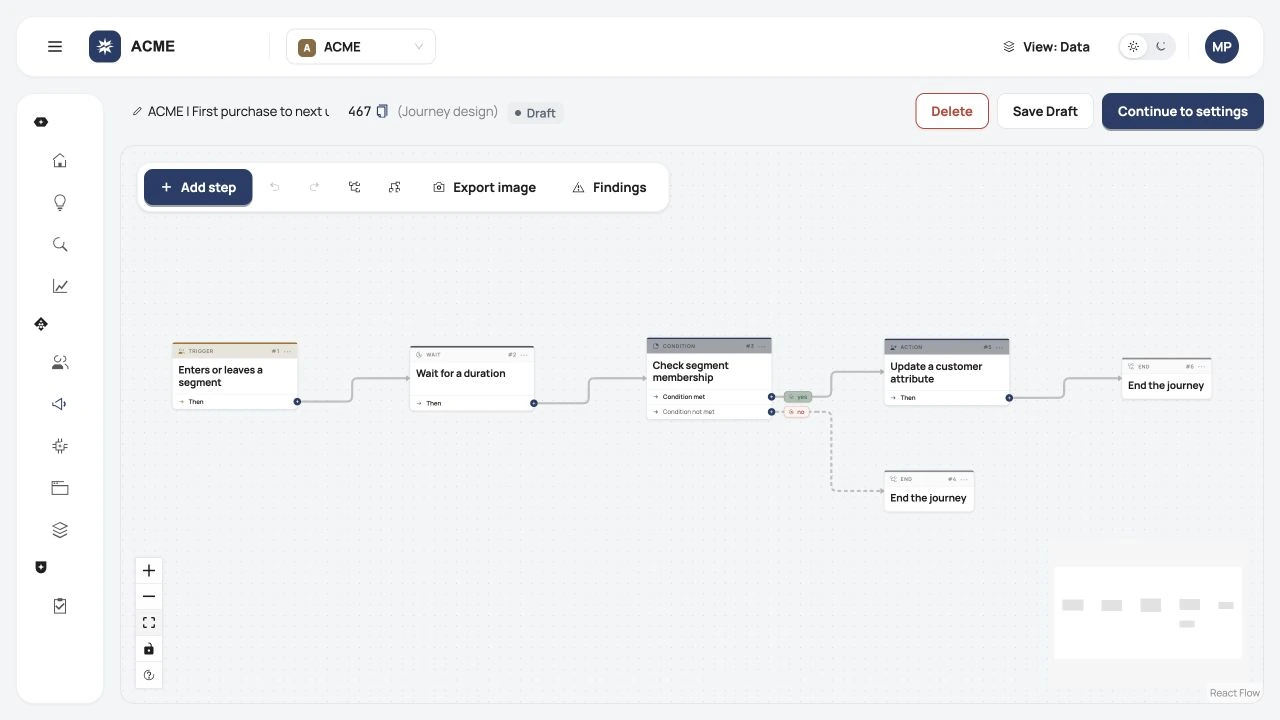
In Binoban, map the scenario across profile data, audiences and the available Engage journey controls. Validate the configured behavior and connected channel before describing a guarantee. A visible journey diagram is helpful, but the complete test includes the source event, membership change and actual destination response.
Measure consistency as well as delivery
Track reminders sent after a qualifying purchase, contacts outside permitted windows, duplicate actions and delayed audience exits. Use a stable denominator, such as eligible reminder opportunities, so changes in volume do not disguise a deterioration. Pair these controls with the customer outcome the journey is intended to improve.
The practical test is straightforward: let a fictional customer abandon a cart, purchase through another path, change a contact preference and open a service issue. At each step, inspect which actions remain valid. Coordinated channels should reflect those changes in a way the team can explain and verify.
Take the next step